
Description
Key Features:
-
Frequency Bands:
- 2G: 900 MHz / 1800 MHz
- 3G: 2100 MHz / 900 MHz
- 4G: 800 MHz / 1800 MHz / 2600 MHz (depending on model and region)
-
Network Coverage:
- Supports 2G, 3G, and 4G networks across multiple frequencies to improve voice and data signals.
- Coverage area can range from 100m² to 1000m² or more, depending on the model and conditions.
-
Signal Gain:
- Gain typically ranges from 50dB to 70dB (decibels), which determines the level of signal amplification.
- Higher gain provides better coverage and improved signal quality.
-
Max Output Power:
- Can typically range from 10 to 30 dBm depending on the booster.
- Higher power translates to stronger signal output.
-
Transmission Power:
- 2G: 10-20 dBm
- 3G: 20-23 dBm
- 4G: 23-30 dBm (varies by model and region)
-
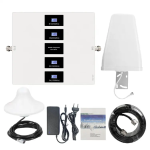
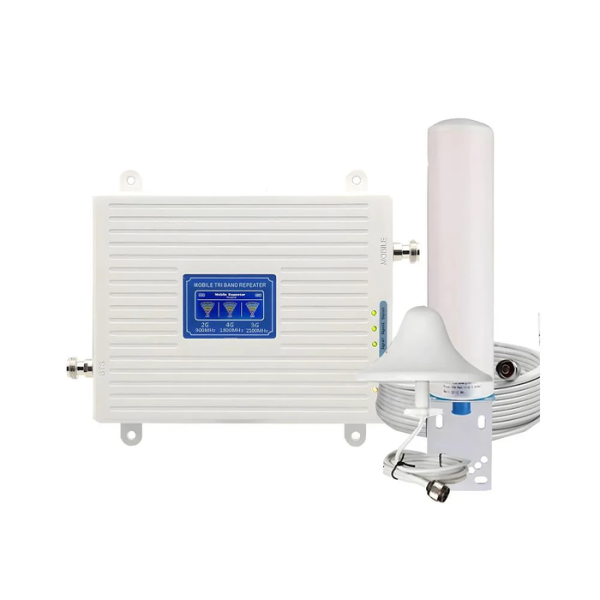
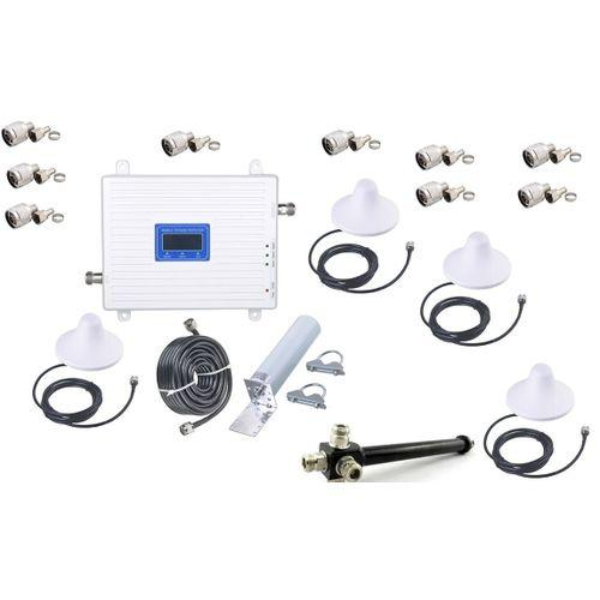
Indoor Antenna:
- Typically a panel antenna or ceiling antenna, designed to distribute the boosted signal inside the building or area.
- Directional or omnidirectional antennas may be used depending on the setup.
-
Outdoor Antenna:
- Usually an external Yagi or log-periodic antenna that connects to the booster to capture the outside signal.
- Outdoor antenna can be installed on the roof or high up for optimal reception.
-
Power Supply:
- AC Powered: Generally operates on a standard 110V to 240V AC power source.
- Some models may include DC-powered options for specific needs (like vehicles).
-
Automatic Gain Control (AGC):
- Automatically adjusts the signal strength to prevent interference and optimize performance based on signal conditions.
-
Compatibility:
- Compatible with various network carriers (Check local carrier frequencies for full compatibility).
- Works for both voice and data, improving call quality and internet speeds.
-
Installation:
- Easy setup with plug-and-play installation.
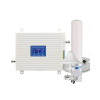
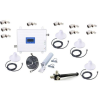
- Includes all necessary components (booster, indoor/outdoor antennas, cables).
-
Safety and Regulatory Compliance:
- Certified to meet FCC, CE, and RoHS standards for safe operation.
- Built-in overload protection, signal oscillation control, and thermal protection for safety.
-
Temperature Range:
- Typically operates in the range of -10°C to 55°C (14°F to 131°F).
Additional Features:
- LED Indicators: Signal strength, power, and status indicators.
- Noise Reduction: Reduces external interference for clearer communication.
- Coverage Area Customization: Some models allow for adjustable gain to target specific areas of a building or zone.
Applications:
- Ideal for improving signal in homes, offices, rural areas, or places with poor GSM coverage.
- Works with mobile carriers that support GSM, 3G, and 4G LTE networks.


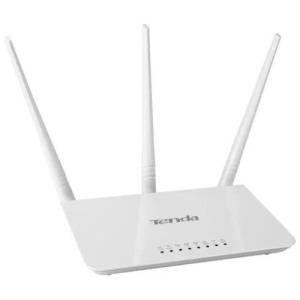 Tenda F3 300Mbps Wi-Fi Router